

















What is the new formaldehyde limit from 6 August 2026?
EU Regulation 2023/1464 establishes that, after 6 August 2026, articles that exceed specific levels of released formaldehyde under the test conditions defined by the regulation may no longer be placed on the market.
In particular, the limit is set at:
- 0.062 mg/m³ for furniture and wood-based articles;
- 0.080 mg/m³ for other articles covered by the restriction.
For the wood-based panel industry, the first value is therefore particularly relevant. It is important to underline that the regulation refers to the concentration of formaldehyde released into the air under specific testing conditions. It is therefore not simply a matter of the amount of formaldehyde contained in an individual material, but of the emissions measured according to the criteria defined by the new European rules. In the case of complex products, moreover, the limit is assessed by considering the product as a whole.
Why has the European Union introduced new limits?
We spend a significant part of our time inside homes, offices, schools, hospitality facilities, means of transport and other enclosed environments. Materials, furniture and components used in these spaces can contribute to the quality of the air we breathe. The new European restriction has therefore been introduced with the aim of reducing people’s exposure to formaldehyde in indoor environments, by establishing common criteria across Europe and harmonised testing conditions.
For those who design spaces, the choice of materials therefore becomes even more important. Mechanical performance, lightness, stability and workability remain essential, but they are increasingly complemented by parameters relating to emissions and the healthiness of indoor environments.
What changes for panels, furniture and interior applications?
The new regulation directly affects many sectors that use wood-based articles. These include, for example, furniture, interior design, fit-outs, construction and many other applications in which panels and components are used within spaces occupied by people. For manufacturers and designers, it therefore becomes increasingly important to understand the emission characteristics of the materials used and verify their suitability for the intended application.
In this context, low-emission panels and NAF – No Added Formaldehyde solutions, manufactured without added formaldehyde in the bonding system, become particularly relevant. This is not only about complying with a new regulatory requirement. It also means considering indoor environmental quality as an integral feature of the project itself.
Formaldehyde, campers and caravans: what changes from 2027?
EU Regulation 2023/1464 also includes a specific provision for road vehicles. In this case, the deadline is later: from 6 August 2027, road vehicles in which the formaldehyde concentration inside the vehicle exceeds 0.062 mg/m³ under the test conditions established by the regulation may no longer be placed on the market. This issue is particularly relevant for the camper and caravan sector, where indoor spaces are compact and contain numerous elements made from panels, coverings, furniture and components.
The choice of materials used for walls, furniture, storage units and other interior elements therefore becomes part of a design approach that must combine lightness, performance and air quality. The sector has one additional year compared with the general deadline for furniture and wood-based articles, with the restriction applying from 6 August 2027.

NAF Comfortply: poplar plywood with no added formaldehyde
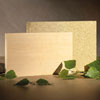
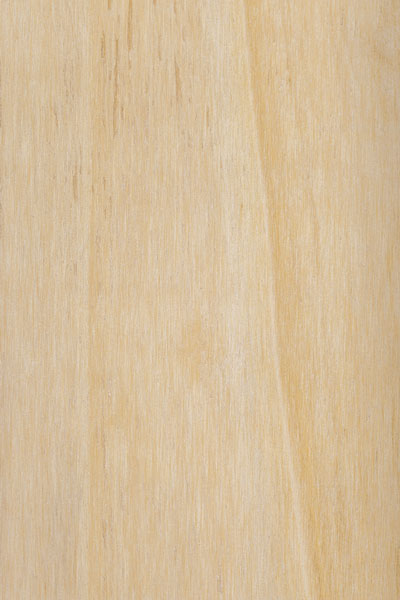
For the past three years, we have been working on the issue of emissions, investing in research into solutions capable of reducing emissions from panels used in indoor environments. This research led to the development of NAF Comfortply, a poplar plywood panel manufactured with a no-added-formaldehyde bonding system with formaldehyde emissions of just 0.01 mg/m³.
With NAF Comfortply formaldehyde emissions are reduced to almost zero, helping to support indoor air quality. At the same time, the panel retains the typical characteristics of poplar plywood: is lightweight, easy to work with and versatile and can be used in a wide range of applications, including Furniture and Interior Design, Fit-outs, RV – Motorhomes and Caravans, construction, Green Building, Public Projects and Commercial Vehicles. The panel is also suitable for further processing such as decorative finishing, laminating and painting.
Choosing materials that meet both today’s and tomorrow’s standards
EU Regulation 2023/1464 represents another step forward in the evolution of how indoor environments are designed and assessed. The quality of a material no longer depends only on what we can see or on its mechanical performance. What we cannot see matters too. Emissions, material composition and their impact on air quality are becoming increasingly important factors in the design of homes, furniture, public spaces, hospitality facilities and means of transport.
For companies, designers and architects, understanding these parameters means being able to make more informed choices and develop products that are already prepared for the new European requirements. Choosing the right panel today also means designing spaces according to tomorrow’s standards.
Are you working on a project where low emissions and indoor air quality are important requirements? Discover NAF Comfortply or contact our team to identify the most suitable poplar panel for your application.